
Reviewed by: Joshua M. Newman, M.D., General, Surgical and Cosmetic Dermatologist.
Skin is the largest organ of the human body, so large that it encapsulates every system within it. But when was the last time you checked on your skin, especially during these hot summer months?
Skin cancer, its types, and associated treatments have been receiving a lot of attention lately, and for good reason. According to recent statistics, 1 in 5 Americans will develop skin cancer by age 70. With a starking 20% chance of catching the deadly disease, learning the facts about skin cancer treatment, diagnosis, testing, and the different types is vital. Understand the nuances so you can take the proactive steps necessary for prevention, early detection, and informed decision-making.
When it comes to addressing a diagnosis, the most effective skin cancer treatment depends entirely on the cancer’s type, size, and location. Primary options range from standard surgical excision, electrodessication with curettage, topical medications, and radiation therapy to Mohs micrographic surgery, which offers the highest cure rate for basal and squamous cell carcinomas. Ultimately, consulting an expert board-certified dermatologist is the most crucial step to ensure an accurate diagnosis and a highly precise, customized treatment plan.
Table of Contents
Table Comparing Different Skin Cancer Treatments
At-a-Glance: Comparing Skin Cancer Treatments
| Treatment Type | How It Works | Best Used For | Key Advantage |
| Mohs Surgery | Layer-by-layer removal with immediate lab microscopic analysis. | High-risk areas (face, neck) for BCC and SCC. | Highest cure rate; spares maximum healthy tissue. |
| Electrodessication and Curettage | Scraping and burning | Localized BCC and SCC on the body | Quick, effective outpatient procedure. |
| Surgical Excision | Cutting out the visible tumor along with a safety margin of normal skin. | Standard, localized BCC, SCC, and early Melanoma. | Quick, effective outpatient procedure. |
| Cryotherapy | Freezing the cancerous tissue using liquid nitrogen. | Usually, pre-cancerous or benign lesions. | Non-invasive; no surgical cutting required. |
| Topical Therapies | Applying prescription creams that trigger an immune response. | Early, superficial basal cell carcinomas and squamous cell carcinomas | Done at home; ideal for low-risk, non-facial spots. |
Types of Skin Cancer
1. Basal Cell Carcinoma (BCC)
Basal cell carcinoma (BCC) is the most common form of skin cancer, constituting around 80% of all cases. Typically forming in sun-exposed areas like the face, neck, and hands, BCC manifests as a pearly bump or pinkish patch. Thinking it may be just a superficial blemish initially, it accelerates into a bleeding, crusty, or ulcer-ridden lesion. Despite its slow growth and the fact that it rarely metastasizes, the only way to prevent local damage is through early detection. If formed, treatments like surgical removal, cryotherapy, and topical medications can combat it.
2. Squamous Cell Carcinoma (SCC)
Squamous cell carcinoma (SCC) is the second most prevalent skin cancer, presenting in 20% of all cases. Like BCC, it appears through sun exposure on the face, ears, and hands. Its appearance varies, from red nodules to scaly patches. The difference between SCC and BCC is that SCC can spread to other body parts instead of staying localized to one spot. Detecting and treating it early on can yield high cure rates, achieved by surgical excision, Mohs surgery, cryotherapy, or radiation therapy.
3. Melanoma
The American Cancer Society predicts this year that an estimated 97,610 new melanomas will be diagnosed (about 58,120 in men and 39,490 in women), and around 7,990 people are expected to die of melanoma (about 5,420 men and 2,570 women). Such figures suggest that melanoma is the most aggressive skin cancer type.
The skin cancer variant derives from melanocytes, the pigment-producing skin cells. Though representing a smaller percentage of skin cancers, melanoma has the potential to spread quickly to other organs if not detected early. The probability of its development increases with sun exposure; regardless, it can form anywhere despite being unexposed to sunlight.
Melanoma appears as irregular, multi-colored moles that grow and evolve. To spot the signs, follow the ABCDE rule. This proactive measure is well-known in the medical world for systemizing the warning signs for malignant melanoma (MM)—an acronym for Asymmetrical, Border, Color, Diameter, and Evolving.
The process involves identifying skin growths like moles for an asymmetrical makeup, uneven borders, dark, black, or multi-colored surface, diameter greater than 6 mm, and evolution in shape, color, and size. If at least one of these variables is a definitive no, you should be safe from melanoma. Surgery, chemotherapy, radiation therapy, immunotherapy, and targeted therapy are all potential options when treatments are needed.
Prevention
UV rays, a type of imperceptible energy emitted by the sun, are the most likely cause of any skin cancer. Everyone should adopt precautions like reducing direct midday sun exposure, seeking shaded areas, and using umbrellas, hats, and sunglasses with 99% UV ray blockage to mitigate the harmful effects. Most importantly, remember to wear sunscreen with an SPF of at least 15.
Skin Cancer Diagnosis and Testing
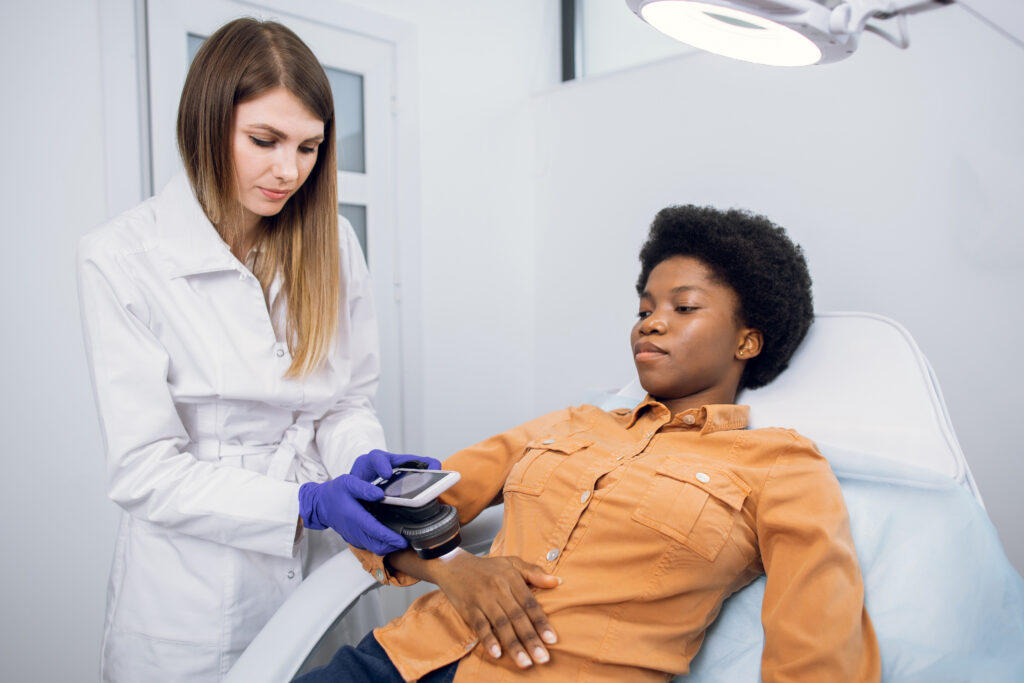
To perform skin cancer testing and diagnosis effectively, perform regular self-examinations and professional skin checks and detect changes in moles, lesions, or spots. If any concerns arise, seek medical help from an experienced dermatologist. They use diagnostic methods like dermoscopy, skin biopsy, and advanced imaging techniques to accurately pinpoint skin cancer types and stages.
At AMARA MD, leading dermatologist Joshua Newman, M.D., and physician assistant Shannon Bednarz, PA-C, perform Mohs Micrographic Surgery to remove skin cancer precisely. The AMARA dermatology team offers various treatment options and medical-grade products for both standard and complex dermatologic conditions—so you can achieve the healthy, smooth complexion you deserve.
Don’t wait for skin cancer to present itself. Book your appointment with the Venice, FL, experts at AMARA today.
**While we strive to provide accurate and up-to-date information, medical knowledge is constantly evolving, and new research may change the nature of certain conditions. Please remember to consult with a healthcare professional or dermatologist for proper diagnosis, treatment, and guidance regarding skin cancer or any other medical condition.**
Frequently Asked Questions
The primary types of skin cancer treatment include Mohs micrographic surgery, standard surgical excision, electrodessication and curettage, radiation therapy, and topical prescription medications. Choosing the correct path depends entirely on the cancer’s stage and location, which is why an evaluation by the medical experts at AMARA is critical for a successful recovery.
Surgical excision, electrodessication and curettage, and Mohs micrographic surgery are the most common treatments for localized skin cancers. These procedures physically remove the tumor to ensure no cancer cells remain. Undergoing these treatments with specialized skin cancer experts guarantees precise margins, minimizing scarring while maximizing your clearing rate.
Mohs micrographic surgery is widely considered the gold standard treatment for both basal cell and squamous cell carcinomas, especially on the face or neck. It offers an unparalleled 99% cure rate. Trusting AMARA’s board-certified dermatologist, Dr. Joshua Newman, ensures this delicate technique is performed with absolute precision.
Rarely, early-stage, superficial skin cancers can be treated without surgery using topical chemotherapy creams. However, only a qualified dermatology expert can determine if a non-surgical approach is safe for your specific diagnosis without risking the cancer spreading.
Standard excision involves cutting out the tumor and checking the edges in an off-site lab days later. Mohs surgery is performed in-office by an expert dermatologist who examines 100% of the surgical margins layer by layer in real time, preserving as much healthy facial tissue as possible.