


Reviewed by:
Quick answer: Most Botox side effects are mild and temporary. Bruising, redness, swelling, tenderness, and headache can occur after treatment, while eyelid or brow drooping is less common. Serious reactions are rare, but patients should know which symptoms require prompt medical attention.
Botox Cosmetic temporarily reduces activity in targeted facial muscles, which can soften expression lines. Like any prescription treatment, it also comes with possible side effects.
For first-time patients, common questions include what to expect after treatment, how long common reactions may last, and which symptoms warrant a call to the office. A consultation should also cover medical history, medications, previous injectable treatments, and facial asymmetry.
Table of Contents
What Are the Most Common Botox Side Effects?
Most short-term effects are limited to the treatment area. Some come from the injection itself, while others can occur when the medication affects a nearby muscle.
The exact risk varies by treatment area. Current FDA prescribing information reports different adverse reactions for frown lines, forehead lines, and crow’s feet.
Bruising, Redness, Swelling, and Tenderness
Because Botox is given through several small injections, temporary redness, tenderness, swelling, or bruising can occur around the injection sites. The American Society of Plastic Surgeons lists bruising, pain, redness, headache, and temporary facial weakness or drooping among possible effects of botulinum toxin injections.
Minor injection-site reactions often improve quickly, although a bruise may remain visible for several days. Patients who bruise easily should mention that during the consultation.
Provide a complete list of prescription medications, over-the-counter medicines, vitamins, and supplements. Some products can affect bleeding or interact with treatment. Do not stop a prescribed medication to prepare for Botox unless the clinician who manages it tells you to do so.
Botox Headache
Headaches are another recognized Botox side effect, particularly after forehead treatment.
In FDA clinical trials involving Botox Cosmetic for forehead lines together with frown lines, headache was reported in 9% of Botox-treated participants compared with 5% of participants receiving placebo.
A mild headache may be short-lived. A severe, persistent, or unusual headache should be discussed with the treating provider, especially if it occurs with other concerning symptoms.
Can Botox Cause a Droopy Eyelid or Brow?
Eyelid or brow drooping is less common than temporary injection-site reactions, but it is one of the side effects first-time patients often want to understand.
In FDA clinical studies of Botox Cosmetic for frown lines, eyelid ptosis was reported in 3% of treated participants. In studies involving forehead and frown-line treatment, 2% of treated participants reported brow ptosis.
Why Eyelid Ptosis Can Happen
Ptosis can occur when botulinum toxin affects a muscle that helps lift the eyelid or brow. Facial anatomy, injection location, dose, and technique can all influence this risk.
The FDA prescribing information includes placement guidance intended to reduce unwanted effects on nearby muscles. When Botox-related eyelid or brow drooping occurs, it is generally temporary and improves as the medication’s effect decreases.
A new droop should still be reported to the treating provider so the cause can be evaluated and appropriate short-term management can be discussed.
How Long Do Botox Side Effects Last?
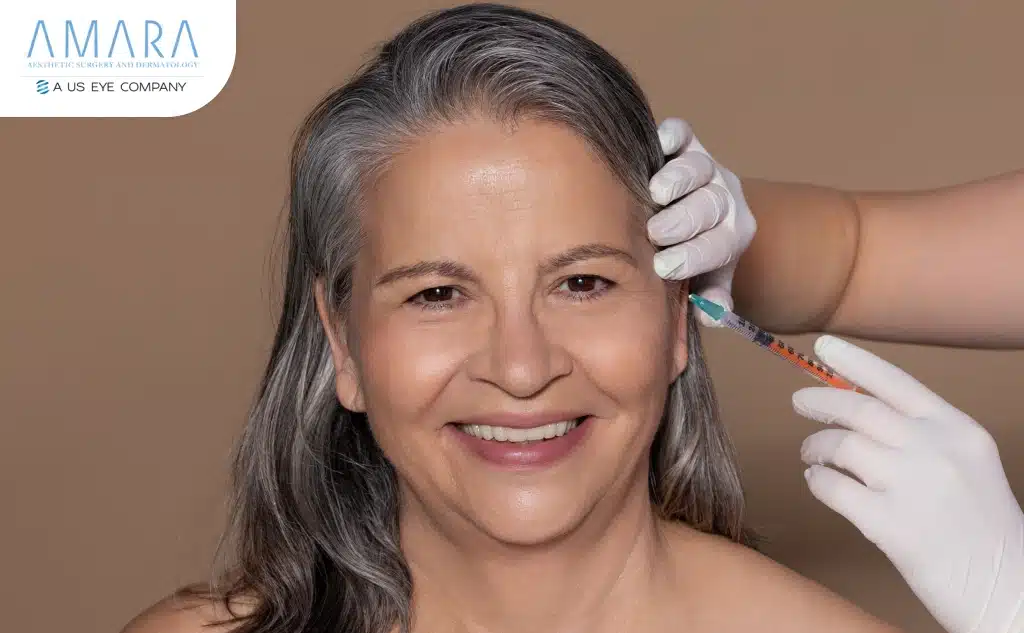
There is no single timeline for every side effect. Minor redness, tenderness, swelling, or small injection-site bumps generally settle relatively quickly. Bruising may remain visible for several days, while unwanted effects on nearby muscles can take longer to resolve.
Results and Side Effects Follow Different Timelines
Botox does not reach its full cosmetic effect immediately. Patients may notice changes within the first several days, with results continuing to develop after treatment.
A temporary bruise, headache, or other local reaction should not be expected to last as long as the cosmetic result itself. AMARA’s guide to What Not to Do After Botox offers additional aftercare guidance.
If a symptom is worsening, unusual, or simply doesn’t feel right, contact the treating office rather than assuming it is part of the normal adjustment period.
What Are the Rare but Serious Botox Side Effects?
Botox Cosmetic carries an FDA boxed warning regarding the possible spread of toxin effects away from the injection site. Symptoms can include generalized muscle weakness, double vision, difficulty speaking, trouble swallowing, or breathing problems.
FDA labeling also states that no definitive serious adverse-event reports of distant spread have been identified with dermatologic use of Botox or Botox Cosmetic at the labeled doses in the prescribing information.
When to Seek Medical Attention
Seek immediate medical attention for trouble breathing, swallowing, or speaking after treatment. Signs of a serious allergic reaction also require prompt care.
The FDA has reported serious hypersensitivity reactions with Botox products, including anaphylaxis, hives, swelling of soft tissues, and difficulty breathing.
Report new asymmetry, significant eyelid drooping, worsening eye symptoms, or another concerning reaction to the treating office for evaluation.
What Should You Discuss Before Your First Botox Appointment?
A Botox consultation should cover more than the lines someone wants to soften. The provider needs enough information to evaluate whether treatment is appropriate and how to plan it.
The FDA identifies several considerations that may affect Botox treatment, including previous reactions to botulinum toxin, infection at a proposed injection site, certain neuromuscular disorders, and swallowing or breathing problems.
Bring a Complete Medical and Treatment History
Before treatment, tell the provider about:
- Prescription and over-the-counter medications
- Vitamins and supplements
- Previous Botox or other botulinum toxin treatments
- Previous reactions to injectable treatments
- Neuromuscular, swallowing, or breathing conditions
- Existing eyelid or facial weakness
- Pregnancy or plans to become pregnant
The provider can also evaluate natural facial movement and existing asymmetry before treatment. Establishing that baseline helps when the provider assesses results later.
Patients researching Botox treatment centers in Venice, FL can use their consultation to discuss whether Botox, filler, or another aesthetic option better matches the concern they want to address.
Botox and Dermal Fillers Have Different Risks
Botox and dermal fillers are both injectable aesthetic treatments, but they work differently. Botox temporarily reduces activity in selected muscles, while dermal fillers add volume or structural support beneath the skin. The FDA treats them as different types of products with different risk profiles.
Someone considering Botox for expression lines may therefore need a different plan from someone interested in lip filler or another volume-restoring treatment.
AMARA offers Botox and dermal filler services in Venice, FL with aesthetic care led by Dr. John Fezza. AMARA’s guide to combining Botox with laser treatment or filler also explains how different options may fit into a coordinated plan.
Key Takeaways
- Temporary bruising, redness, swelling, tenderness, and headache can occur after Botox.
- Eyelid or brow drooping is less common and may occur if a nearby muscle is affected.
- FDA clinical trials reported a 9% headache rate with forehead treatment and a 3% eyelid ptosis rate with frown-line treatment.
- Serious reactions are uncommon, but trouble breathing, swallowing, or speaking requires immediate medical attention.
- A complete medical and medication history helps the provider evaluate risks before treatment.
Conclusion: Know What to Expect Before Your First Visit
Understanding Botox side effects can make a first consultation more useful. Most concerns involve temporary local effects, while eyelid or brow changes occur less often. Serious reactions require prompt attention.
A consultation should review facial anatomy, medical history, medications, treatment goals, and possible side effects before treatment. That gives patients a clearer idea of what Botox can realistically accomplish and what to expect afterward.
Patients considering Botox injection treatment in Venice, FL can meet with AMARA’s aesthetic team to discuss whether treatment fits their goals and medical history. Dr. John Fezza focuses on cosmetic facial care and develops treatment plans around each patient’s anatomy and goals.
Call 941-499-7823 or schedule a consultation with AMARA to discuss your options.
Frequently Asked Questions
A previous bruise does not automatically mean someone cannot receive Botox again. Tell the provider what happened so they can review bruising risk, medications, and the planned treatment area.
Do not inject Botox Cosmetic into an area with an active infection. Contact the office if an infection or significant skin problem develops where treatment was planned.
No. Botox-related ptosis is generally temporary because the medication’s effect on the affected muscle diminishes with time. A provider should still evaluate a new eyelid droop.
No. Botox changes muscle activity, while lip filler adds volume with an injectable filler material. Each treatment has its own risks.