

Reviewed by: Dr. John P. Fezza, Cosmetic Facial Surgeon.
Table of Contents
Summary
Botox and filler trends for summer 2026 favor individualized treatment and results that fit the patient’s natural features. Current conversations center on conservative Botox dosing, measured lip enhancement, skin-smoothing injectables, and gradual improvement rather than dramatic volume.
Summer does not make injectables more effective, and normal Florida heat does not ruin settled results. The season mainly affects scheduling. Outdoor plans, travel, weddings, and other events can influence when treatment is performed and how much time a patient should allow for temporary swelling or bruising.
At AMARA Aesthetic Surgery and Dermatology in Venice, treatment planning begins with facial anatomy, movement, volume, skin quality, and the patient’s priorities. Botox and dermal fillers serve different purposes, so the appropriate plan may involve one treatment or a carefully coordinated combination.
What Is Shaping Botox and Filler Trends in 2026?
The strongest trends are less about following one popular product and more about precision. Patients want providers to determine whether a concern comes from muscle movement, volume loss, facial structure, or the skin’s surface before recommending treatment.
1. Natural Movement and Facial Balance
With Botox, a natural result may involve softening an expression line while preserving appropriate movement. With filler, it may mean restoring support in one area instead of adding volume throughout the face.
The same dose or amount will not produce the same result for everyone. Muscle strength, facial proportions, skin thickness, previous treatment, and age-related volume changes all affect the plan.
2. Coordinated Treatment Plans
Botox temporarily reduces targeted muscle activity. Dermal fillers can restore support, soften selected folds, or enhance features such as the lips or cheeks. Other aesthetic treatments address texture, pigment, and surface quality.
Some patients benefit from combining methods, while others need only one. AMARA’s guide to combining Botox with laser or filler explains how timing and sequencing can be coordinated around the patient’s concerns.
Summer Botox Trends Patients Are Asking About
Botox remains a common option for the temporary improvement of expression lines. In 2026, many treatment conversations focus on dose, placement, and how much movement the patient wants to retain.
Conservative Dosing, Sometimes Called “Baby Botox”
“Baby Botox” is an informal term rather than a separate product or standardized medical protocol. It usually describes using a smaller or more targeted dose of botulinum toxin to create a lighter effect.
This may suit some first-time patients, people with less pronounced lines, or those who prefer more movement. A lower dose is not automatically better. Too little product may provide limited correction or wear off sooner, while poor placement can create imbalance even when the total dose is small.
“Micro-Botox” may refer to more superficial injection techniques and should not be treated as interchangeable with conservative intramuscular dosing. Treatment still needs to account for the strength, location, and interaction of the targeted muscles.
Interest Beyond the Upper Face
Patients are also asking about treatment outside the forehead, frown lines, and crow’s feet. Depending on the concern, botulinum toxin may be considered for selected lower-face muscles or visible neck bands.
Some uses, including cosmetic masseter treatment for jawline narrowing, are off-label. Because masseter injections can affect chewing strength and facial proportions, they require careful examination. Jaw pain or teeth grinding may also need evaluation by a dentist or another appropriate clinician.
More Thoughtful Event Timing
Botox does not create its full visible effect immediately. Patients preparing for a wedding, vacation, reunion, or professional event should leave enough time for the result to develop and for temporary redness or bruising to resolve.
Scheduling several weeks ahead also allows the provider to evaluate the settled result before the event. A last-minute appointment offers less flexibility if the patient experiences bruising or wants to discuss the outcome at a follow-up visit.
Dermal Filler Trends for Summer 2026
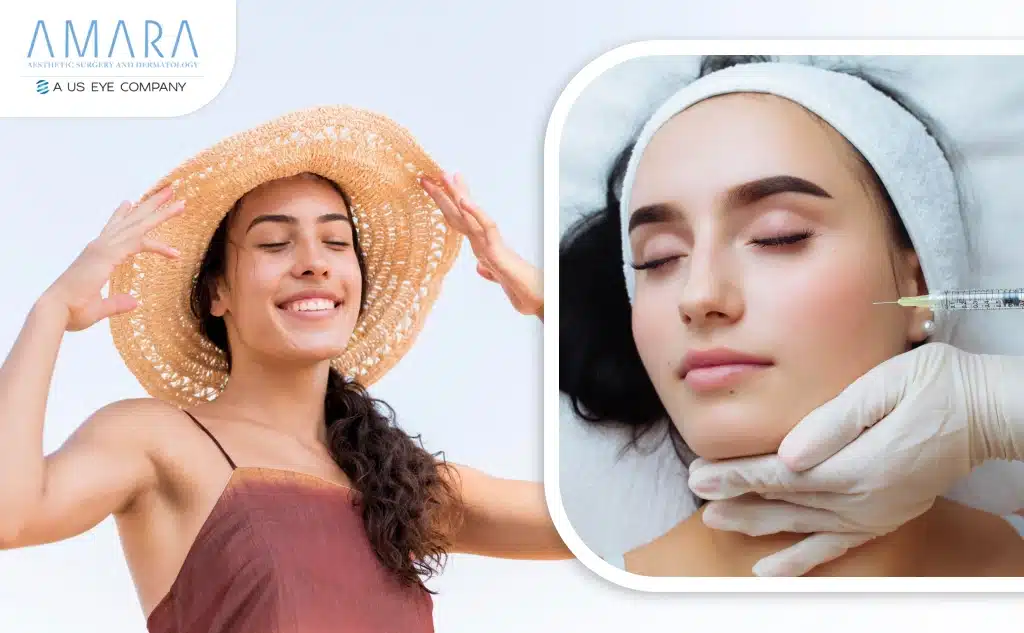
Filler trends are also becoming more selective. Product choice, placement, and treatment area matter more than simply adding volume.
Subtle Lip Filler and Shape Refinement
Summer lip filler trends favor proportion, border definition, symmetry, and measured fullness. Some patients want a modest increase in volume. Others are more concerned with uneven shape, age-related thinning, or the relationship between the upper and lower lips.
Neither a needle nor a cannula is automatically best for every patient. The provider may use one or both depending on anatomy, product, treatment goal, and injection plane. Swelling and bruising remain possible with either technique.
Allowing about two weeks before an important event gives common swelling and bruising time to improve and makes the final balance easier to assess.
Skin-Smoothing Injectables
One clear 2026 development is continued interest in injectables intended to improve skin smoothness rather than create obvious volume.
In June 2026, the FDA expanded the approved indication for SKINVIVE by JUVÉDERM to include improvement of cheek smoothness and reduction of neck lines in adults over 21. Availability and candidacy vary by practice and patient.
This type of treatment is sometimes called an “injectable moisturizer,” but that phrase can create the wrong expectation. The FDA-approved indication concerns visible skin smoothness and neck appearance. It is still an injectable medical treatment with potential side effects and specific approved uses.
Biostimulatory Filler and Gradual Change
Biostimulatory products such as Sculptra remain relevant for patients who prefer improvement that develops gradually. Sculptra is a poly-L-lactic acid injectable used for certain facial wrinkles and areas of volume change.
Patients may need a treatment series rather than a single appointment. According to the FDA’s Sculptra information, cheek results may last up to 24 months, although duration varies. AMARA lists Sculptra among its available dermal filler options.
Does Heat Affect Botox or Filler Results?
Normal summer weather does not melt dermal filler or deactivate Botox after treatment. Immediate recovery instructions still matter, particularly when swelling, bruising, or pressure on a treated area is a concern.
Heat, Exercise, and Aftercare
Providers may advise patients to limit strenuous exercise, saunas, hot tubs, or heavy pressure for a short period. These recommendations are generally intended to reduce irritation, flushing, swelling, bruising, or manipulation of the injection sites.
Evidence supporting many traditional Botox restrictions is limited. The American Academy of Dermatology recommends avoiding rubbing the injection sites and waiting two hours before strenuous activity. Patients should follow their own provider’s instructions because the treatment area, product, and medical history can change the recommendation.
Sun Protection Still Matters
Sun exposure does not cancel an injectable result, but ultraviolet exposure continues to affect skin texture, pigment, and collagen. Broad-spectrum sunscreen, shade, and protective clothing remain important in Southwest Florida, especially while bruising or irritation is visible.
AMARA’s guide to the early signs of sun damage in Florida explains which changes deserve closer attention.
What to Expect at a Botox and Filler Appointment at AMARA
Patients looking for a Botox treatment center in Venice, FL should expect a medical consultation rather than a preset treatment package.
Facial Assessment and Treatment Planning
Dr. John Fezza specializes in cosmetic facial surgery and nonsurgical injectables, including Botox and fillers. Kalie Kosek, PA-C, also provides injectable treatments as part of AMARA’s cosmetic and oculoplastic team.
The consultation reviews health history, medications, previous injections, facial movement, volume distribution, skin quality, and timing. The recommendation may involve a Botox injection treatment, dermal filler treatment, another service, or a staged combination.
Treatment and Recovery
Botox typically requires a brief office visit. Filler may take longer because placement and balance are assessed throughout treatment. AMARA states that filler appointments commonly take about 30 to 45 minutes, depending on the areas treated.
Temporary redness, tenderness, swelling, and bruising can occur. Dermal fillers also carry uncommon but serious risks, including accidental injection into a blood vessel. Patients should discuss the product, intended placement, risks, and the provider’s plan for identifying and managing complications.
Key Takeaways
- Summer 2026 trends favor conservative dosing and individualized facial balance.
- “Baby Botox” describes lighter dosing, not a separate injectable product.
- Some lower-face and masseter uses are off-label and require careful evaluation.
- Summer lip filler trends emphasize subtle shape and proportion.
- Skin-smoothing and biostimulatory injectables reflect interest in skin quality and gradual change.
- Heat does not ruin settled Botox or filler, but appropriate aftercare can help limit irritation and bruising.
Conclusion
The Botox and filler trends shaping summer 2026 reflect a preference for natural-looking change and better treatment planning. Conservative neuromodulator dosing, subtle lip enhancement, skin-smoothing options, and gradual biostimulatory treatments may each be appropriate when they match the patient’s anatomy and goals.
Summer should guide scheduling rather than determine treatment. A consultation can clarify whether a concern comes from movement, volume change, skin quality, or several factors together.
Explore Botox and Dermal Fillers at AMARA
AMARA offers personalized Botox and dermal filler services at its Venice office. Dr. John Fezza and the cosmetic team develop treatment plans around each patient’s features, concerns, and preferences.
Call 941-499-7823 or schedule an appointment to discuss your goals.
Frequently Asked Questions
They can sometimes be performed together. Staging may be preferable when the provider wants to evaluate the effect of one treatment before adding another or when swelling could make precise assessment more difficult.
Flying does not automatically alter an injectable result. Travel may be uncomfortable if swelling develops, and a complication is harder to assess when you are away from your provider. Scheduling filler several days to two weeks before a trip is generally more practical.
Discuss your medications, supplements, allergies, pregnancy or breastfeeding status, previous injectable treatments, history of cold sores, upcoming dental procedures, and any recent illness or skin infection. Do not stop a prescribed medication unless the clinician who manages it tells you to do so.
Makeup may be permitted after treatment, but it should be applied gently without rubbing or pressing the injection sites. Follow the instructions provided at your appointment, particularly if you have visible irritation or pinpoint bleeding.
Contact the practice promptly if you develop worsening or unusual pain, pale or discolored skin, increasing swelling, drainage, fever, or another unexpected reaction. Vision changes, difficulty breathing, weakness, or symptoms resembling a stroke require immediate medical care.