
Reviewed by: Dr. Joshua M. Newman, M.D., General Surgical and Cosmetic Dermatologist.
Are you curious about sclerotherapy and how it might help you? AMARA has the answers to some of your most frequently asked questions about sclerotherapy, with insights provided by Dr. Newman, General, Surgical, and Cosmetic Dermatologist and leading vein specialist.
If you want to know the details of the procedure, please read our sclerotherapy injection vein therapy page. Should you have any additional questions or wish to explore if this therapy suits you, please contact us to schedule a consultation with Dr. Newman at the Center in Venice, Florida.
Table of Contents
What is Sclerotherapy?
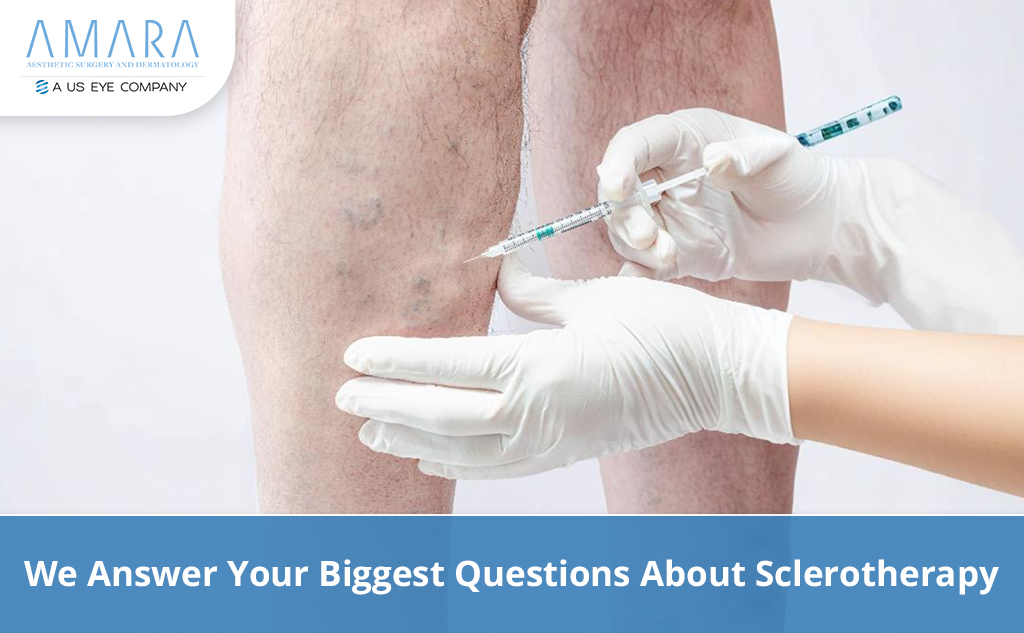
Sclerotherapy is a minimally invasive medical procedure used for varicose vein removal and to eliminate spider veins. During the procedure, a solution called a sclerosant is injected into the affected veins, causing them to collapse and eventually fade away. For a more detailed description, read our past sclerotherapy blog here.
How Many Sclerotherapy Sessions Are Needed?
The number of sessions required for the spider vein laser treatment varies depending on the severity and number of veins being treated. Typically, 2-4 sessions are recommended, spaced 3-4 weeks apart. Some patients may see results after just one session, while others may need more.
What Are the Sclerotherapy Results: Before and After?
Patients often notice a noticeable improvement in the appearance of their veins after treatment. Before and after photos typically show reduced visibility of spider and varicose veins, with the treated areas looking smoother and healthier.
How Effective is Sclerotherapy for Varicose Veins?
Sclerotherapy is highly effective for treating spider veins and varicose veins. It is considered one of the most effective non-surgical treatments available, with a success rate of 75%- 90%. Most patients experience a significant reduction in symptoms and cosmetic improvement.
What Can I Expect During a Sclerotherapy Session?
The procedure is quick, usually taking between 15-60 minutes. When performed by a skilled AMARA specialist at a varicose vein clinic, the procedure typically takes about 20 to 30 minutes and does not require hospitalization or anesthesia. It involves injecting the sclerosant into the veins using a fine needle. There is no downtime, and patients can resume normal activities immediately after the session.
Is Sclerotherapy Painful?
Most patients tolerate sclerotherapy well and report minimal discomfort. The procedure does not typically require anesthesia, but a topical numbing agent can be used if needed. When performed by a skilled AMARA specialist, patients may feel a slight prick, but the procedure is generally painless.
What are the Side Effects of Sclerotherapy?
Common side effects include bruising, itching, swelling, skin discoloration, and redness around the injection site. These side effects are usually temporary and resolve within a few days to weeks. Serious complications are rare.
What Should I Avoid After Sclerotherapy?
For best results after sclerotherapy, it’s important to follow certain guidelines. Patients should wear compression stockings as advised by their healthcare provider. They should also avoid strenuous exercise for a few days and hot baths or saunas to support proper healing.

Are There Alternatives to Sclerotherapy?
Yes, there are alternatives to sclerotherapy for vein treatment, including laser therapy, radiofrequency ablation, and vein stripping surgery. Each option has its own benefits and considerations, so it’s important to discuss these with a qualified specialist to determine the best treatment for your condition.
Does Sclerotherapy Work for Everyone?
While sclerotherapy is compatible with most patients, there is no absolute guarantee of success for everyone. Under 10% of patients may experience poor to fair outcomes, where veins do not completely disappear after six treatments. In rare cases, the condition of the veins may worsen following treatment.
More questions? Book an appointment at AMARA for a comprehensive appointment with Shannon Bednarz, PA-C at our varicose vein clinic.
**While we strive to provide accurate and up-to-date information, medical knowledge is constantly evolving, and new research may change the nature of certain conditions. Please remember to consult with a healthcare professional or dermatologist for proper diagnosis, treatment, and guidance regarding your medical condition.**
Frequently Asked Questions
Sclerotherapy results are generally permanent because the treated veins collapse, turn into scar tissue, and are naturally reabsorbed by the body. However, the procedure cannot prevent new spider veins from forming over time. Scheduling an evaluation with the spider vein experts at AMARA helps keep your legs clear and healthy.
For small spider veins, you will see noticeable clearance within 3 to 6 weeks. Undergoing treatment with advanced dermatology specialists ensures proper technique and optimized healing protocols, giving you the fastest path to smooth skin.
Most individuals with bothersome spider veins are excellent candidates. However, pregnant individuals or those with a history of deep vein blood clots should avoid the procedure. A thorough evaluation by our medical dermatology team ensures that sclerotherapy is completely safe and appropriate for you.
Spider veins that are successfully treated with sclerotherapy do not return. However, new spider veins can develop over time due to genetics, aging, or lifestyle factors. Choosing a qualified dermatology clinic ensures a thorough assessment and a personalized plan to maintain long-term results and healthy-looking legs.
Yes, walking immediately after your sclerotherapy session is highly recommended and encouraged. Regular, gentle walking for roughly 20 minutes daily keeps your blood flowing properly and prevents clots from forming. Following precise, expert post-care guidelines from your clinician ensures a smooth, completely safe recovery process.