

Reviewed by: Dr. Joshua M. Newman, General Surgical and Cosmetic Dermatologist.
Summary
Living in Venice or Sarasota means living with regular sun exposure, which makes routine skin checks more important over time. A professional exam can help detect suspicious spots early, when treatment is often simpler, and outcomes are better. This guide explains why skin cancer screening matters, what your provider is looking for, what treatment may involve, and how AMARA approaches care for patients who need further evaluation or confirmed treatment.
Table of Contents
Why Should You Schedule Regular Skin Cancer Screening?
Regular skin cancer screenings help identify suspicious changes early, when treatment options are often more effective and less complex. These exams are especially important for people living in sunny areas, where ongoing UV exposure can increase the risk of skin damage and skin cancer over time. Routine checks allow providers to monitor changes, evaluate concerning spots, and recommend the right next steps when needed.
Why does local sun exposure matter?
Florida’s climate makes year-round sun protection important. Over time, repeated UV exposure can increase the risk of precancerous damage and skin cancer. That is one reason routine skin cancer screening is so important, especially for patients with fair skin, a history of sunburns, frequent outdoor exposure, or a personal or family history of skin cancer.
Understanding the early signs of sun damage, such as changes in skin texture, pigmentation, or spots that appear different from the surrounding skin, can help patients know when it may be time to seek professional evaluation.
What happens during a skin check?
During a professional screening, a provider examines the skin for suspicious moles, non-healing sores, rough patches, or changing lesions that may need monitoring or biopsy. These visits are usually straightforward, but they can play an important role in finding problems before they become more serious.
Quick Fact: Sarasota County has a high melanoma incidence rate, which makes regular professional skin checks especially important for residents.
What Types of Skin Cancer May Need Treatment?
Skin cancer includes several different types, but the three most common forms that may require medical evaluation and treatment are basal cell carcinoma, squamous cell carcinoma, and melanoma. Basal cell carcinoma is the most common and typically grows slowly, while squamous cell carcinoma can be more aggressive if left untreated. Melanoma is less common but requires prompt attention because it has a higher risk of spreading. Understanding the differences between these skin cancers can help patients recognize warning signs and seek timely care.
What is basal cell carcinoma?
Basal cell carcinoma is the most common form of skin cancer. It often appears as a pink bump, a pearly spot, or a sore that does not fully heal. It usually grows slowly, but it can still damage nearby tissue if left untreated.
What is squamous cell carcinoma?
Squamous cell carcinoma often looks rougher or more inflamed. It may appear as a red, scaly, crusted, or tender patch. Compared with basal cell carcinoma, it carries a greater risk of spreading if left untreated.
What is melanoma?
Melanoma is the most serious of the three. It may develop as a new dark spot or an existing mole that changes in color, shape, size, or symmetry. Regular melanoma screening can help identify suspicious changes early, especially for individuals with a history of sun exposure, atypical moles, or increased skin cancer risk. Melanoma needs prompt medical attention because it can spread more aggressively than other common skin cancers.
In simple terms, basal cell carcinoma is usually the slowest-moving, squamous cell carcinoma can become more aggressive if delayed, and melanoma requires the fastest response. That is why regular screening matters. It helps catch the difference early.
Skin Cancer Warning Signs: Quick Reference Guide
Knowing what to look for can help patients recognize changes that may need professional evaluation. While not every unusual spot is cancerous, changes in size, color, texture, or healing patterns should be checked by a qualified provider.
| Type | Common Appearance | Risk if Untreated | Typical Treatment | Basal Cell Carcinoma | A pearly bump, pink growth, open sore that does not heal, or shiny patch on sun-exposed skin | Usually slow-growing but can damage surrounding tissue if left untreated | Excision, Mohs surgery, topical treatments, or other therapies depending on the case | Squamous Cell Carcinoma | A rough, scaly patch, red bump, crusted area, or sore that keeps returning | Has a higher chance of spreading compared with basal cell carcinoma if treatment is delayed | Excision, Mohs surgery, or other targeted treatments based on location and severity | Melanoma | A changing mole or dark spot with uneven borders, multiple colors, increasing size, or evolving appearance | Can spread to other parts of the body and may become life-threatening without early treatment | Surgical removal and additional treatments depending on the stage |
How Does Early Detection Affect Treatment and Outcomes?
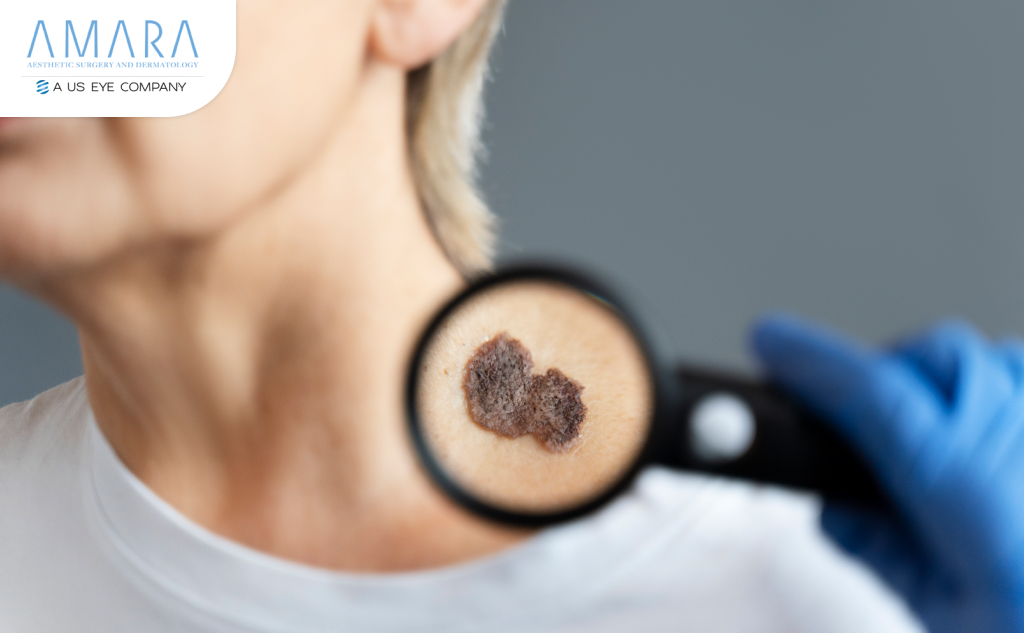
Skin cancer is generally easier to treat when found early. Smaller and more localized lesions may require less extensive treatment, which can mean a simpler procedure and a better cosmetic result, especially on the face.
What should patients watch for at home?
Between appointments, it helps to pay attention to any spot that changes, bleeds, crusts, or does not heal. The ABCDE rule remains useful for moles:
- Asymmetry
- Border irregularity
- Color variation
- Diameter growth
- Evolving appearance
Quick fact: The American Academy of Dermatology (AAD) recommends paying attention to changes in moles or spots, including asymmetry, irregular borders, color changes, diameter growth, and evolving appearance, as these may be warning signs that require evaluation.
What Can You Expect from Skin Cancer Treatment?
If a provider finds a lesion that needs closer evaluation, the next step may be a biopsy. That allows the team to confirm what the lesion is and decide whether treatment is needed.
Skin cancer treatment depends on the type, size, depth, and location of the lesion.
What kinds of treatment are common?
Common options may include:
- Biopsy and diagnosis to confirm what the lesion is
- Standard excision for lesions that can be removed with a margin of surrounding skin
- Mohs surgery for certain basal and squamous cell carcinomas, especially on delicate or visible areas
- Follow-up skin surveillance for patients with a history of skin cancer or multiple precancerous spots
For many patients, the right plan depends on both medical need and location on the body. A small lesion on the arm and one on the nose may not be approached the same way.
Why Choose AMARA for Skin Cancer Care?
A strong skin cancer doctor should do more than identify suspicious lesions. The right provider should also know when a lesion can be monitored, when it needs a biopsy, and when it should be treated with a more specialized approach.
What does specialized care look like?
At AMARA, patients have access to providers experienced in both screening and treatment planning. Dr. Joshua M. Newman is board-certified in dermatology with subspecialty training in Mohs micrographic surgery, which is often used for skin cancers on cosmetically sensitive or functionally important areas. Shannon Bednarz, PA-C, also plays an important role in preventive skin exams and follow-up care.
What can a treatment path look like?
A common example would be a patient from Venice or Sarasota who comes in for a skin check because of a rough, persistent spot on the nose or cheek. After evaluation and biopsy, the lesion may be identified as basal cell carcinoma or squamous cell carcinoma. If the location calls for tissue-sparing precision, Mohs surgery may be recommended to remove the cancer while preserving as much healthy skin as possible.
That kind of process is why patients often look for a skin cancer center when they want both diagnosis and a clear treatment path in one setting.
Key Takeaways
- Routine skin cancer screening can help identify suspicious lesions early.
- Basal cell carcinoma, squamous cell carcinoma, and melanoma each require prompt evaluation.
- Early detection often means simpler treatment and better cosmetic outcomes.
- Skin cancer treatment may include biopsy, excision, Mohs surgery, and long-term follow-up.
- Patients benefit from consistent skin checks, especially when they are regularly exposed to the sun.
Conclusion
Skin cancer can often be successfully treated when caught early, making regular screening one of the most important steps you can take for long-term skin health. In a place where sun exposure is part of daily life, paying attention to changing spots and keeping up with routine exams matters.
CTA
If you are due for a skin check or have noticed a spot that looks different, schedule an appointment with AMARA today. Our team provides skin cancer screening and personalized skin cancer treatment for patients in Venice, Sarasota, and surrounding communities.
Frequently Asked Questions
A full-body skin exam is often fairly quick, though timing can vary based on how many areas need a closer look.
Yes. Many people diagnosed with skin cancer do not have a previous history, which is why routine screening still matters.
No. Some spots need monitoring, while others need biopsy or treatment. The next step depends on how the lesion looks and where it is located.
No. Mohs is commonly used for certain basal and squamous cell cancers, especially on the face or other sensitive areas, but it is not the right approach for every case.
The most important thing is to have the spot evaluated promptly. Patients should seek care when a lesion changes or does not heal.